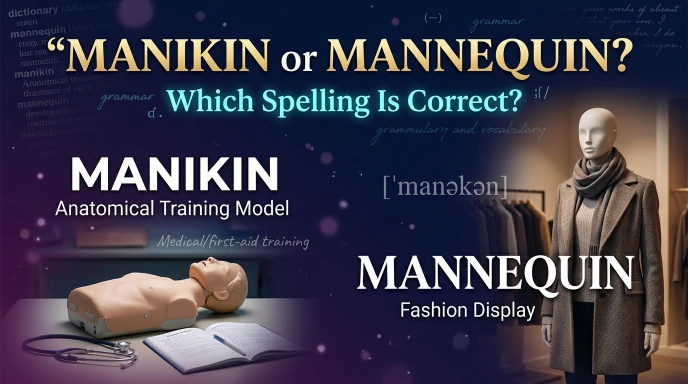
Manikin and mannequin are both correct English words, but they have different meanings and uses. A mannequin is a model of a human body that shops use to display clothes. A manikin is a small model of the human body that people often use for medical training, teaching, or study. These words look and sound alike, so many writers mix them up. If you have searched for “manikin or mannequin,” you may want to know which spelling fits your sentence. The answer depends on what you want to describe. One word usually refers to a shop display figure, while the other often refers to a model used for learning or practice. This guide explains both words in simple terms. You will learn their meanings, origins, spelling rules, and common uses. You will also see clear examples from daily life, work, education, and formal writing. By the end, you can choose the right word with confidence.
Quick Answer
Both manikin and mannequin are correct spellings, but they usually describe different things.
- Mannequin means a life size human shaped figure that shops use to display clothes.
- Manikin means a small or human shaped model used for teaching, medical training, or study.
Examples:
- The shop placed a red dress on a mannequin.
- The nurse practiced CPR on a training manikin.
- The art student used a wooden manikin to study body shapes.
Use mannequin for clothing displays. Use manikin for training models or small human figures.
Definition and Meaning of Manikin or Mannequin
What Does Mannequin Mean?
A mannequin is a human shaped figure that stores use to show clothes. It can have a full body, a head, arms, and legs. Some mannequins have no facial features.
Simple meaning: A model used to display clothes.
Examples:
- The store dressed the mannequin in a winter coat.
- A mannequin stood in the front window.
- The designer placed a new outfit on the mannequin.
People also use mannequins in art, fashion design, and photography.
What Does Manikin Mean?
A manikin is a small model of the human body or a human shaped figure. People use it for teaching, practice, and study. Medical schools and training centers may use manikins to teach CPR and other skills.
Simple meaning: A model of the human body used for learning or practice.
Examples:
- The students practiced first aid on a manikin.
- The art teacher used a wooden manikin to explain body posture.
- The training center bought a new CPR manikin.
Key Difference in Usage
The easiest way to remember these words is to think about their purpose.
- Use mannequin for clothes and shop displays.
- Use manikin for medical practice, teaching, or small human models.
Some dictionaries and writers may use the words in overlapping ways. However, this distinction helps you choose the clearest word in most everyday situations.
The Origin of Manikin or Mannequin
The words manikin and mannequin share a related history. Both connect to the Dutch word manneken, which means “little man.” This word comes from man, meaning “man.”
The English word manikin appeared first. People used it for a small figure or model of a human body. Artists and teachers used such figures to study the human form.
The French form mannequin later became common in English. It first referred to an artist’s model or a figure used to show clothing. Over time, it became the usual word for the human shaped figures in clothing shops.
The spellings developed through different language forms and uses. Today, both words remain correct, but they often point to different types of models.
British English vs American English Spelling
The words manikin and mannequin have the same spelling in British and American English. Neither word needs a spelling change based on location.
The main difference comes from meaning and context, not from regional spelling rules.
| Word | British English | American English | Common Meaning |
| Manikin | Manikin | Manikin | A human model used for teaching or practice |
| Mannequin | Mannequin | Mannequin | A figure used to display clothes |
Examples in both forms of English:
- The shop displayed a new coat on a mannequin.
- The students used a manikin for medical practice.
- The artist studied the human form with a wooden manikin.
Both countries use the same spellings. In fashion, mannequin is the usual choice. In medical training, manikin is often the preferred term.
Which Spelling Should You Use?
Your choice depends on the object you want to describe. The spelling does not change between the US, UK, or other English speaking countries.
For US Readers
Use mannequin for a figure that displays clothes in a store.
Example: The store placed a new outfit on the mannequin.
Use manikin for a model used in medical training or education.
Example: The class practiced CPR on a manikin.
For UK and Commonwealth Readers
Follow the same rule. Use mannequin for fashion displays and manikin for training models.
Example: The shop placed a dress on a mannequin.
For a Global Audience
Choose the word that clearly describes the object.
- Mannequin: A figure used to display clothing.
- Manikin: A model used for training, teaching, or study.
If your readers may not know the word “manikin,” explain its purpose the first time you use it. This will make your writing easier to understand.
Common Mistakes with Manikin or Mannequin
Writers often mix up these words because they look and sound similar. Here are common mistakes and their corrections.
1. Using Manikin for a Shop Display
Incorrect: The store placed a jacket on the manikin.
Better: The store placed a jacket on the mannequin.
Use mannequin when you mean a shop display figure.
2. Using Mannequin for a CPR Training Model
Less precise: The students practiced CPR on a mannequin.
Better: The students practiced CPR on a manikin.
Use manikin for a model made for medical training.
3. Treating Both Words as Exact Synonyms
Incorrect: A manikin and a mannequin always mean the same thing.
Correct: The words have related meanings, but their common uses differ.
Check the purpose of the model before choosing a word.
4. Misspelling Mannequin
Incorrect: The store bought a maniquin.
Correct: The store bought a mannequin.
Remember the spelling: m a n n e q u i n.
5. Misspelling Manikin
Incorrect: The students used a mannekin for training.
Correct: The students used a manikin for training.
Remember the shorter spelling: m a n i k i n.
Manikin or Mannequin in Everyday Examples
These examples show how to use both words in daily life, work, education, and formal writing.
In Emails
- Please place the new dress on the mannequin before the store opens.
- The training team needs a new CPR manikin for the workshop.
- We will use a wooden manikin during the art lesson.
In News
- The clothing store placed new mannequins in its front windows.
- Medical students used training manikins during a first aid course.
- The museum displayed an old wooden manikin in its art section.
On Social Media
- This outfit looks great on the mannequin!
- Our class learned CPR with a training manikin today.
- The artist shared a sketch based on a wooden manikin.
In Formal Writing
- The retailer used mannequins to present its latest clothing range.
- The medical program provided manikins for practical training.
- The artist used a manikin to study human posture.
These examples show why context matters. A clothing display usually needs mannequin, while a training model usually needs manikin.
Manikin or Mannequin:Google Trends & Usage Data

The word mannequin often appears in fashion, shopping, retail, and clothing design. People search for it when they want to learn about shop displays, clothing models, or fashion figures.
The word manikin has a more specific use. It often appears in medical education, CPR training, art, and anatomy lessons. People may search for it when they need a training model or want to check its spelling.
Search interest can vary by country and topic. However, no verified live Google Trends figures or country rankings are included here. Exact search volumes should not be assumed.
For writing, both words can serve different search needs. A page about shop displays should focus on mannequin. A page about medical training models should explain manikin.
Quick Comparison Table
| Feature | Manikin | Mannequin |
| Main meaning | A model of the human body | A figure used to display clothes |
| Common use | Medical training, art, and teaching | Fashion and retail displays |
| Spelling in the US | Manikin | Mannequin |
| Spelling in the UK | Manikin | Mannequin |
| Example | The nurse used a manikin. | The shop used a mannequin. |
| Easy memory tip | Think of training | Think of clothing displays |
FAQs
1. Is it manikin or mannequin?
Both spellings are correct. Mannequin usually means a figure used to display clothes. Manikin often means a model used for teaching or medical practice.
2. What is the difference between a manikin and a mannequin?
A mannequin usually displays clothing in shops. A manikin often serves as a training or teaching model, such as a CPR practice figure.
3. Is mannequin the correct spelling for a shop display?
Yes. Mannequin is the standard spelling for a human shaped figure that displays clothes in a store.
4. Is manikin used for CPR training?
Yes. Medical and first aid training centers often use manikins to teach CPR and other practical skills.
5. Do British and American English use different spellings?
No. Both British and American English use manikin and mannequin with the same spellings.
6. Can manikin and mannequin mean the same thing?
Their meanings can overlap in some contexts, but they are not always interchangeable. Use “mannequin” for clothing displays and “manikin” for training models when you want to be precise.
7. How can I remember the difference?
Think of mannequin as a fashion display figure and manikin as a model used for learning or practice. This simple rule helps you choose the right word.
Conclusion
The words manikin and mannequin are both correct, but they usually describe different types of human models. Use mannequin when you talk about a figure that displays clothes in a shop or fashion setting. Use manikin when you mean a model used for medical training, teaching, art, or study. Both words have the same spelling in British and American English, so you do not need to change them for different audiences. Their shared history explains why they look alike, but their common uses help you tell them apart. If you are unsure, think about the purpose of the figure. Does it show clothing? Choose “mannequin.” Does it help someone learn or practice a skill? Choose “manikin.” This simple rule can prevent spelling mistakes and make your writing clearer. When you write for a global audience, add a short explanation if the context may confuse readers. With the right word, your message will sound clear and natural.
Learn More About!
Ought or Aught: Which Word Is Correct and What Is the Difference?
Landline or Mobile: What Is the Difference and Which Is Better?
Nap or Nothing: Which Phrase Is Correct and What Does It Mean?

Hi, I’m Jordan Wells, a writer interested in English grammar, spelling, and word usage.
At Grammerynex, I simplify confusing words, grammar rules, and common English mistakes into clear, easy-to-understand explanations.
My goal is simple: make English easier, one word at a time.