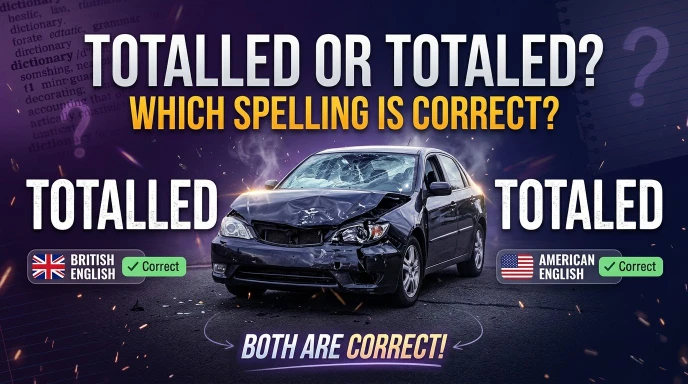
Both “totalled” and “totaled” are correct spellings. The difference depends on the type of English you use. British English, Australian English, and other Commonwealth varieties often use totalled. American English uses totaled. Many people search for “totalled or totaled” because they want to know which spelling to use in writing, schoolwork, emails, and news reports. Both words come from the verb total, which means to add numbers or to reach a full amount. The word can also describe a vehicle that has suffered so much damage that repairs may not make sense.
The spelling difference follows a common rule for verbs that end in a consonant plus a final vowel pattern. British English often doubles the final l before adding ed, while American English usually keeps one l in this case. This guide explains the meanings, spelling rules, origins, and everyday uses of both forms. You will learn which spelling fits your audience and how to avoid common mistakes.
Quick Answer
Both totalled and totaled are correct. Use the spelling that matches your audience.
- Totalled: Common in British, Australian, and many other Commonwealth forms of English.
- Totaled: Standard in American English.
Both forms are the past tense and past participle of the verb total.
Examples:
- British English: The mechanic said the car was totalled.
- American English: The mechanic said the car was totaled.
The meaning does not change. Only the spelling changes.
Definition and Meaning of Totalled or Totaled
The words totalled and totaled have the same meaning. They are past forms of the verb total.
Clear Definition
Totalled or totaled means added together to make a complete amount. It can also mean that someone or something suffered damage or loss that made it a total loss.
Simple Meaning
The word has two common uses:
- To add numbers: You add several amounts to find their full sum.
- To destroy or damage: You damage something so badly that it may no longer be useful or worth repairing.
Context and Usage
Use totalled or totaled when you talk about sums, costs, scores, or serious damage.
Examples:
- The shopkeeper totalled the daily sales.
- The repair costs totaled $5,000.
- The crash totalled the car.
Different Meanings
The exact meaning depends on the sentence.
Adding amounts:
- She totaled the bills before paying.
- He totalled the scores after the game.
Describing damage:
- The accident totalled his car.
- The storm totalled several buildings.
In both spelling styles, the word carries the same meaning.
The Origin of Totalled or Totaled
The word total comes from the Medieval Latin word totalis, which means “whole” or “entire.” It entered English through French and later became a common word for a complete amount or sum.
English speakers formed the verb total from this noun. They used it to describe the act of adding amounts together. The word also gained a related meaning: to damage or destroy something completely.
The spelling difference developed from regional spelling habits.
British English often doubles the final l when it adds ed to verbs such as travel and cancel. This rule gives us travelled and cancelled. The same pattern gives us totalled.
American English often uses one l in these forms. That gives us traveled, canceled, and totaled.
Both spellings remain correct in their own varieties of English.
British English vs American English Spelling
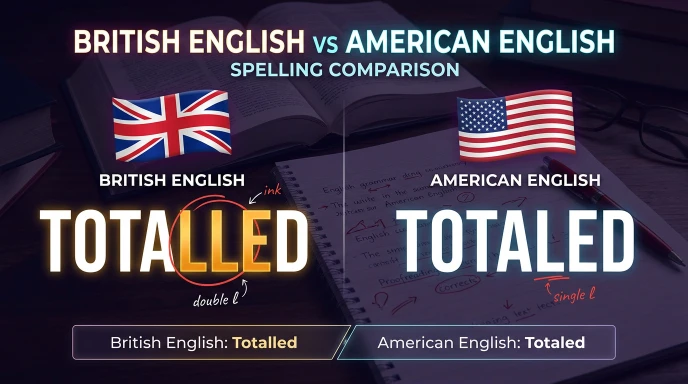
British and American English follow different spelling habits when they add ed to the verb total.
| English Type | Correct Spelling | Example |
| British English | Totalled | The shop totalled the costs. |
| American English | Totaled | The shop totaled the costs. |
| Australian English | Totalled | The storm totalled the damage. |
| Canadian English | Totalled or totaled | Both forms may appear; follow the style guide. |
British English Examples
British English usually doubles the final l.
- The company totalled its expenses.
- The accident totalled the vehicle.
- The scores totalled 100 points.
American English Examples
American English usually keeps one l.
- The company totaled its expenses.
- The accident totaled the vehicle.
- The scores totaled 100 points.
The meaning stays the same in every example. Only the spelling changes.
Which Spelling Should You Use?
Choose your spelling based on your readers and the style guide you follow.
Use Totalled for British English
Choose totalled when you write for readers in the United Kingdom and other regions that follow British spelling.
Examples:
- The repair bill totalled £2,000.
- The crash totalled the car.
Use Totaled for American English
Choose totaled when you write for readers in the United States.
Examples:
- The repair bill totaled $2,000.
- The crash totaled the car.
What About Other Countries?
Australian English commonly uses totalled. Canadian English may use either form, depending on the publication or style guide.
For global writing, choose one spelling style and use it throughout your article. Do not switch between totalled and totaled without a clear reason.
Common Mistakes with Totalled or Totaled
Writers often mix these spellings or use the wrong form. Here are some common mistakes and their corrections.
Mixing British and American Spelling
Incorrect: The company totalled the costs and then totaled the bills.
Better: The company totalled the costs and then totalled the bills.
Use one spelling style throughout your writing.
Adding an Extra Letter
Incorrect: The shop totalledl the sales.
Correct: The shop totalled the sales.
Do not add an extra l after the correct British spelling.
Using Totaled in British Writing
Less suitable for British style: The repairs totaled £3,000.
British style: The repairs totalled £3,000.
American English uses totaled, but British English usually uses totalled.
Thinking the Words Have Different Meanings
Both spellings mean the same thing. The difference comes from regional spelling rules, not meaning.
Changing the Spelling in One Article
If you start with totalled, keep using totalled. If you choose totaled, use it throughout the article.
Consistency makes your writing clear and professional.
Totalled or Totaled in Everyday Examples
Both spellings appear in daily writing. The right choice depends on your audience.
In Emails
British English:
“The final expenses totalled £1,500. Please review the attached report.”
American English:
“The final expenses totaled $1,500. Please review the attached report.”
In News
British English:
“The crash totalled two vehicles and closed the road.”
American English:
“The crash totaled two vehicles and closed the road.”
On Social Media
British English:
“My shopping costs totalled more than I expected!”
American English:
“My shopping costs totaled more than I expected!”
In Formal Writing
British English:
“The study found that the losses totalled £50,000.”
American English:
“The study found that the losses totaled $50,000.”
These examples show that both forms work in everyday and formal writing. Just match the spelling to your chosen style.
Totalled or Totaled:Google Trends & Usage Data
People search for “totalled or totaled” because they want to know which spelling fits their region. Both forms appear in online articles, news reports, insurance discussions, and financial writing.
The spelling often follows regional habits:
- United Kingdom: Totalled is the usual spelling.
- United States: Totaled is the usual spelling.
- Australia: Totalled is common.
- Canada: Both forms may appear, depending on the publication and style guide.
The word totaled often appears in American discussions about car accidents and insurance claims. The word totalled appears in similar discussions in British and Australian English.
These are general spelling patterns, not verified live search rankings. Google Trends can help compare interest in both terms by country and date. Search interest may change over time, so check live data before using exact figures or country rankings.
Totalled vs Totaled: Key Differences
| Feature | Totalled | Totaled |
| Spelling style | British English | American English |
| Meaning | Added up or damaged beyond repair | Added up or damaged beyond repair |
| Verb form | Past tense and past participle | Past tense and past participle |
| Common region | UK, Australia, and other Commonwealth styles | United States |
| Example | The costs totalled £500. | The costs totaled $500. |
| Correctness | Correct | Correct |
The main difference is regional spelling. Neither form is wrong when you use it in the right English style.
FAQs
Q1. Is it totalled or totaled?
Both spellings are correct. British English usually uses totalled, while American English uses totaled.
Q2. Is totalled British or American?
Totalled is the usual British spelling. It is also common in Australian English and other varieties that follow British spelling.
Q3. Is totaled American English?
Yes. Totaled is the standard American English spelling.
Q4. Do totalled and totaled mean the same thing?
Yes. Both words are past tense and past participle forms of total. They can mean added up or damaged beyond repair.
Q5. Why does British English use two Ls?
British English often doubles the final l when it adds ed to certain verbs. This rule gives us totalled, travelled, and cancelled.
Q6. Which spelling should I use in formal writing?
Use totalled for British English and totaled for American English. Follow your publisher’s or workplace’s style guide if it gives a specific rule.
Q7. Is a car totalled or totaled?
Both forms are correct. Use totalled in British English and totaled in American English. Both describe a car that has suffered damage that makes it a total loss.
Conclusion
The choice between totalled and totaled depends on your English spelling style. Both words are correct, and both have the same meaning. They describe adding amounts together or damaging something so badly that it becomes a total loss.
Use totalled when you write in British English or follow a style that doubles the final l. Use totaled when you write in American English. Readers in Australia often expect totalled, while Canadian writers may follow either form based on their chosen style guide.
The most important rule is to stay consistent. Do not use both spellings in the same article unless you discuss the difference between them. Check your audience before you choose a form. This small step can make your writing look clear and professional. Once you learn the regional rule, you can use totalled and totaled with confidence in emails, reports, news, and everyday writing.
Explore More About!
Imminent or Eminent: Which Word Is Correct?
Pullies or Pulleys: Which Spelling Is Correct?
Enunciate or Annunciate: Which Word Is Correct?

Hi, I’m Jordan Wells, a writer interested in English grammar, spelling, and word usage.
At Grammerynex, I simplify confusing words, grammar rules, and common English mistakes into clear, easy-to-understand explanations.
My goal is simple: make English easier, one word at a time.








2 thoughts on “Totalled or Totaled: Which Spelling Is Correct?”