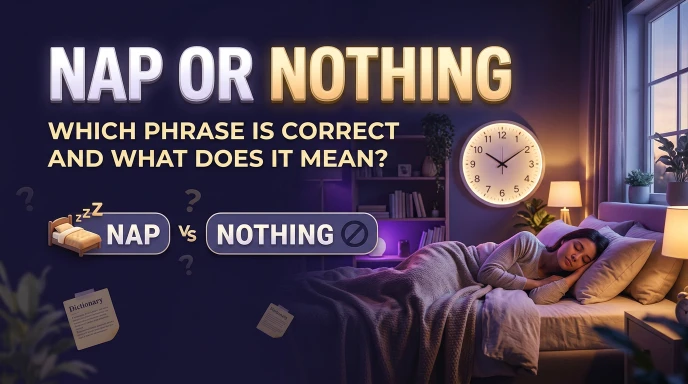
A nap can help you feel fresh, but the phrase “nap or nothing” has a different meaning from the word “nap” alone. People search for “nap or nothing” to understand this phrase, check its meaning, and learn how to use it in daily speech. The phrase often expresses a simple choice: take a nap or do nothing else. It can also suggest that someone feels too tired to do anything without rest.
Unlike spelling pairs such as “color or colour,” nap or nothing is not a British and American spelling difference. Both words have their own meanings, and both follow standard English spelling rules. The phrase may appear in casual chats, social media posts, captions, or jokes about feeling tired.
In this guide, you will learn what “nap or nothing” means, where the words come from, and how to use the phrase. You will also see clear examples, common mistakes, and answers to popular questions. This guide will help you understand the phrase and use it with confidence.
Quick Answer
“Nap or nothing” means choosing to take a short sleep or do nothing at all. People often use it in a casual or funny way when they feel very tired.
Here are two examples:
- “I had a long day. It’s nap or nothing for me.”
- “After that busy week, I choose nap or nothing this weekend.”
The word nap means a short sleep, often during the day. The word nothing means no thing or no activity.
The phrase does not have a special grammar rule. It works as an informal expression that shows a choice or a strong need for rest.
Definition and Meaning of Nap or Nothing
The phrase “nap or nothing” combines two common English words: “nap” and “nothing.”
Clear Definition
- Nap: A short period of sleep, usually during the day.
- Nothing: No thing, no activity, or no action.
- Nap or nothing: A casual phrase that presents a choice between taking a nap and doing no other activity.
Simple Meaning
In simple words, “nap or nothing” means that a person wants to sleep for a short time or avoid doing anything else.
For example:
“I feel so tired today. It’s nap or nothing.”
This sentence shows that the speaker has little energy and prefers rest over other plans.
Context and Usage
People use this phrase in casual situations. It can express tiredness, humor, or a strong desire to rest.
You may see it in:
- Text messages between friends.
- Social media captions.
- Casual conversations.
- Funny posts about busy days.
- Personal comments about sleep and rest.
Does the Phrase Have Different Meanings?
The phrase can carry slightly different meanings based on context.
A choice between sleep and no activity
“I have no energy left. It’s nap or nothing.”
The speaker wants to rest instead of doing another task.
A humorous way to show tiredness
“Monday calls for nap or nothing.”
The speaker uses humor to show how tired they feel.
A strong preference for rest
“After my exam, it’s nap or nothing.”
The speaker plans to rest after a busy or stressful event.
The exact meaning depends on the situation. However, the phrase usually connects rest with a lack of energy or activity.
The Origin of Nap or Nothing
The phrase “nap or nothing” does not have a clearly established historical origin as a fixed English expression. It combines two older English words that people still use today.
Origin of the Word “Nap”
The word nap has roots in Old English. It has long referred to a short period of sleep or rest. Today, people use it for a brief sleep during the day.
Examples include:
- “I take a nap after lunch.”
- “The baby needs a nap.”
- “A short nap can help me feel fresh.”
Origin of the Word “Nothing”
The word nothing comes from Old English forms that combined ideas of “no” and “thing.” It refers to the absence of anything.
Examples include:
- “There is nothing in the box.”
- “I did nothing yesterday.”
- “Nothing can replace a good night’s sleep.”
Why Do People Say “Nap or Nothing”?
People combine the words to create a simple and expressive phrase. It presents rest as the only appealing option.
The phrase works well in modern casual speech because it is short, clear, and easy to understand. It does not come from a spelling change between British and American English.
British English vs American English Spelling
British English and American English use the same spellings for nap and nothing.
There is no regional spelling difference between these words. Both forms work in the United States, the United Kingdom, Canada, Australia, and other English speaking regions.
| Word or Phrase | British English | American English |
| Nap | Nap | Nap |
| Nothing | Nothing | Nothing |
| Nap or nothing | Nap or nothing | Nap or nothing |
| Take a nap | Take a nap | Take a nap |
| Do nothing | Do nothing | Do nothing |
Examples in British English
- “I might have a nap this afternoon.”
- “There is nothing to do today.”
- “After work, it’s nap or nothing.”
Examples in American English
- “I need a quick nap.”
- “I have nothing planned today.”
- “After that long trip, it’s nap or nothing.”
The spelling stays the same in both varieties. Only the speaker’s accent or some surrounding vocabulary may change.
Which Spelling Should You Use?
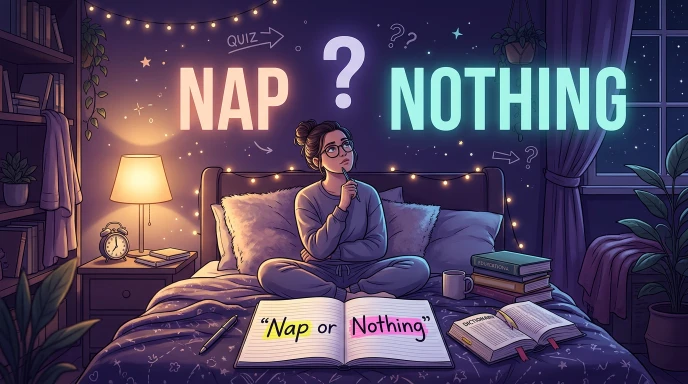
You should always use nap and nothing. Both spellings are correct in British and American English.
Your choice does not depend on your location.
For American Readers
Use “nap” and “nothing” in everyday writing. These words are standard in American English.
Example: “I need a nap before dinner.”
For British Readers
Use the same spellings. British English also uses “nap” and “nothing.”
Example: “I think I’ll have a nap after lunch.”
For Global Readers
Use “nap or nothing” when you want to express a casual choice between rest and no activity.
For schoolwork, business emails, and formal documents, choose clearer wording if the phrase sounds too casual.
For example:
- Casual: “It’s nap or nothing today.”
- Formal: “I need some rest before I continue my work.”
Professional tip: Do not change the spelling of either word for a British or American audience. Focus on the meaning and tone instead.
Common Mistakes with Nap or Nothing
People can understand this phrase easily, but some writing mistakes may affect its meaning or clarity.
Treating “Nap or Nothing” as a Spelling Difference
Incorrect idea: “Nap” is British, while “nothing” is American.
Correct fact: These are two different words. Neither word represents a regional spelling of the other.
Using “Nap” When You Mean a Full Night’s Sleep
A nap usually means a short sleep, often during the day.
Incorrect: “I took a nap for the whole night.”
Better: “I slept through the night.”
Using “Nothing” to Mean Sleep
“Nothing” does not mean sleep. It means no thing or no activity.
Incorrect: “I need nothing because I feel sleepy.”
Better: “I need a nap because I feel sleepy.”
Using the Phrase in Every Formal Situation
“Nap or nothing” sounds casual. It may not suit a formal report or business email.
Casual: “Today is nap or nothing.”
Formal: “I need a short rest before I continue.”
Forgetting the Meaning of “Or”
The word “or” connects choices. In this phrase, it links taking a nap with doing nothing.
Example: “We can go for a walk or stay home.”
The same idea appears in “nap or nothing.”
Nap or Nothing in Everyday Examples
The phrase can fit many casual situations. Here are examples that show how people may use it.
In Emails
The phrase may suit a friendly email to someone you know well.
Example:
“Hi Sam,
I had a busy morning, so I may take a short nap before our call. It’s nap or nothing for me today!
Best,
Alex”
For a formal work email, use “I need a short rest” instead.
In News and Articles
A news article may use the phrase in a light or playful headline. However, a serious article about sleep should use clear and direct wording.
Example:
“After a long week of work, many people look forward to a quiet day of rest. For some, it is nap or nothing.”
On Social Media
The phrase can work well as a short caption or status.
Examples:
- “Big day, low energy. Nap or nothing!”
- “Weekend plans: nap or nothing.”
- “Coffee later. Nap first.”
- “No plans today. Just nap or nothing.”
In Formal Writing
The phrase may sound too casual in formal writing. Use a direct sentence instead.
Casual: “It’s nap or nothing after the long meeting.”
Formal: “I plan to rest briefly after the long meeting.”
Casual: “I need a nap or nothing will get done.”
Formal: “I need some rest before I can work well.”
Nap or Nothing:Google Trends & Usage Data
People may search for “nap or nothing” to understand its meaning, check its grammar, or find examples for social media captions. The phrase also connects with common topics such as sleep, tiredness, rest, and daily routines.
However, no verified live Google Trends figures or country rankings are available in this article. So, the following points describe likely search contexts rather than measured search data.
Why Do People Search for “Nap or Nothing”?
People may search for this phrase for several reasons:
- Meaning: They want to know what the phrase means.
- Grammar: They want to check whether the phrase sounds natural.
- Social media: They need a short caption about rest or tiredness.
- Vocabulary: They want to understand the words “nap” and “nothing.”
- Writing: They want to use the phrase in a message or post.
Usage in Different Countries
The words “nap” and “nothing” have the same spelling in major English speaking countries.
| Region | Common Usage |
| United States | Both words are common in daily speech. |
| United Kingdom | Both words are common in daily speech. |
| Canada | Both words follow standard English spelling. |
| Australia | Both words are common in everyday English. |
| Other English speaking regions | Both words have the same standard spelling. |
Search Context
The word “nap” often appears in content about sleep, health, and daily routines. The word “nothing” appears in many general English phrases.
The full phrase “nap or nothing” has a more casual feel. People may use it for jokes, captions, or personal comments about feeling tired.
Nap or Nothing:Comparison Table
| Feature | Nap | Nothing | Nap or Nothing |
| Word type | Noun or verb | Pronoun | Informal phrase |
| Main meaning | A short sleep | No thing or no activity | A choice between rest and no activity |
| Spelling | Correct | Correct | Correct phrase |
| British English | Nap | Nothing | Nap or nothing |
| American English | Nap | Nothing | Nap or nothing |
| Common use | Sleep and rest | General statements | Casual conversations and captions |
| Example | “I need a nap.” | “I have nothing to do.” | “It’s nap or nothing today.” |
FAQs
Q1. What does “nap or nothing” mean?
“Nap or nothing” means choosing to take a short sleep or do no other activity. People often use it when they feel very tired.
Q2. Is “nap or nothing” a correct phrase?
Yes. People can use it as an informal expression. It works best in casual conversations, messages, and social media captions.
Q3. Is “nap” British or American English?
“Nap” is correct in both British and American English. Neither region uses a different spelling.
Q4. Does “nothing” mean sleep?
No. “Nothing” means no thing or no activity. “Nap” means a short period of sleep.
Q5. Can I use “nap or nothing” in a formal email?
You can use it in a friendly email, but it may sound too casual in a formal message. Write “I need a short rest” for a more professional tone.
Q6. Is “nap or nothing” a common English idiom?
It is not a widely established traditional idiom. It works as a casual expression that people can understand from its words and context.
Q7. What is another way to say “nap or nothing”?
You can say “rest or do nothing,” “take a nap,” or “relax for a while.” Choose the phrase that best fits your meaning.
Conclusion
The phrase “nap or nothing” offers a simple way to express a need for rest. It usually means that a person wants to take a short nap or avoid doing anything else. People often use it in casual chats, funny captions, and everyday conversations.
The two words have clear meanings. “Nap” refers to a short period of sleep, while “nothing” means no thing or no activity. Together, they create an informal phrase that shows a choice or a strong desire to rest.
Both words have the same spelling in British and American English. You do not need to change them for a different audience. However, you should think about the tone before using the full phrase. It works well with friends and on social media, but formal writing needs clearer wording.
Remember this simple rule: use “nap” for a short sleep and “nothing” for no activity. Use “nap or nothing” when you want a casual way to show that rest comes first. This will help you understand the phrase and use it with confidence.
Descover More About!
Totalled or Totaled: Which Spelling Is Correct?
Imminent or Eminent: Which Word Is Correct?
Pullies or Pulleys: Which Spelling Is Correct?

Hi, I’m Jordan Wells, a writer interested in English grammar, spelling, and word usage.
At Grammerynex, I simplify confusing words, grammar rules, and common English mistakes into clear, easy-to-understand explanations.
My goal is simple: make English easier, one word at a time.






2 thoughts on “Nap or Nothing: Which Phrase Is Correct and What Does It Mean?”