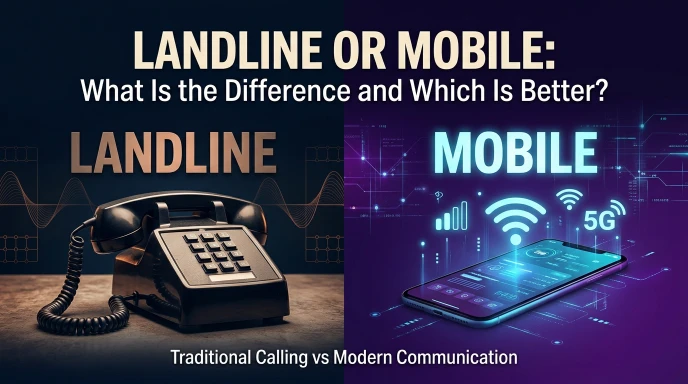
A landline and a mobile phone both help people make calls, but they work in different ways. A landline connects through a fixed line or a wired network. A mobile phone uses a wireless network, so people can carry it and make calls from many places. Each option has its own benefits, and the right choice depends on your needs.
People often search for landline or mobile because they want to understand the difference between these two types of phones. Some people need a reliable phone for home or work. Others want the freedom to call, text, and use the internet while they travel. The terms can also cause confusion on forms that ask for a landline or mobile number.
This guide explains what each term means, where the words come from, and how people use them in daily life. It also compares their features, benefits, and common uses. By the end, you will know when to use each term and which type of phone may suit your needs.
Quick Answer
A landline is a phone that connects to a fixed location through a wired or fixed network. A mobile is a portable phone that connects through a wireless cellular network.
Here are simple examples:
- Landline: A phone that stays in your home or office.
- Mobile: A phone that you carry in your pocket or bag.
A landline usually has a fixed phone number linked to a location. A mobile phone has a number linked to a mobile service.
Quick tip: Use “landline” when you mean a fixed phone. Use “mobile” when you mean a portable cellular phone.
The Origin of Landline or Mobile
The word “landline” combines “land” and “line.” It describes a telephone connection that uses a fixed line on land. People began using the term to distinguish traditional fixed phones from newer wireless phones.
The word “mobile” comes from the Latin word mobilis, which means “movable” or “able to move.” English uses “mobile” to describe things that people can move from place to place.
Mobile phones became more common as wireless technology improved. Early mobile phones were large and costly. Modern mobile phones are smaller and offer many features, such as internet access, cameras, messaging, and video calls.
The two words describe different phone systems. “Landline” focuses on a fixed connection, while “mobile” focuses on portability.
British English vs American English Spelling
The words landline and mobile have the same spelling in British and American English. However, people often use different terms when they talk about mobile phones.
In British English, people commonly say “mobile phone.” In American English, people usually say “cell phone” or simply “cell.”
Here is a simple comparison:
| Meaning | British English | American English |
| Fixed phone | Landline | Landline |
| Portable phone | Mobile phone | Cell phone |
| Phone number for a portable phone | Mobile number | Cell phone number |
| Fixed phone number | Landline number | Landline number |
Both forms are correct in their own regions. The main difference comes from word choice, not spelling.
For example:
- British English: “Please give me your mobile number.”
- American English: “Please give me your cell phone number.”
- Both: “Please give me your landline number.”
Which Spelling Should You Use?
You do not need to choose between two spellings because landline and mobile use the same spelling in British and American English. You should choose the term that fits your audience.
For a US audience: Use “cell phone” when you mean a mobile phone. Use “landline” for a fixed phone.
For a UK audience: Use “mobile phone” for a portable phone. Use “landline” for a fixed phone.
For a global audience: Use “mobile phone” or “mobile” when you want a term that many English speakers understand. You can also write “mobile (cell) phone” when you want to make the meaning clear.
If a form asks for a landline number, enter your fixed phone number. If it asks for a mobile number, enter your cellular phone number.
Common Mistakes with Landline or Mobile
People often mix up these terms because both describe phones. Here are some common mistakes and the correct ways to use them.
1. Using “landline” for every phone
Incorrect: “I left my landline in the car.”
Correct: “I left my mobile phone in the car.”
A landline stays at a fixed location. A mobile phone can move with you.
2. Calling a mobile phone a landline
Incorrect: “Please call my landline number” when you mean your mobile number.
Correct: “Please call my mobile number.”
Use the correct term so people know which number to call.
3. Thinking “mobile” and “cell phone” mean different devices
These terms usually describe the same type of phone. British speakers often say “mobile phone,” while Americans often say “cell phone.”
4. Mixing up phone numbers on forms
Read each field before you enter your number. A landline field asks for a fixed phone number. A mobile field asks for a cellular number.
5. Thinking every landline needs a traditional cable
Some modern fixed phone services use internet technology instead of a traditional copper phone line. The term “landline” can still describe a fixed home or office phone service.
Landline or Mobile in Everyday Examples
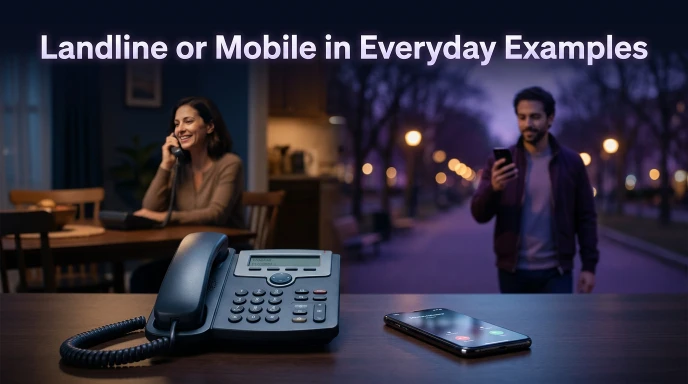
Both terms appear in daily conversations, emails, forms, news reports, and work messages.
Here are some examples:
1. In emails
- “Please share your landline number for our office records.”
- “You can reach me on my mobile phone.”
2. In news reports
- “Many people now use mobile phones for daily communication.”
- “Some offices still keep landline services for business calls.”
3. On social media
- “Do you still use a landline at home?”
- “I use my mobile for calls, messages, and online work.”
4. In formal writing
- “Please provide your landline and mobile numbers.”
- “The company offers mobile support for its customers.”
5. In everyday conversations
- “Can I call you on your mobile?”
- “The office landline is not working today.”
These examples show how context helps readers understand each term.
Landline or Mobile:Google Trends & Usage Data
People search for “landline or mobile” when they compare phone services, fill out forms, or learn the difference between fixed and portable phones.
The terms also vary by region:
- United Kingdom: “Mobile phone” is a common term for a portable phone.
- United States: “Cell phone” is more common in everyday speech.
- Other English speaking regions: People may use “mobile phone,” “cell phone,” or local variations.
Mobile phones play a major role in daily communication. People use them for calls, messages, internet access, work, and entertainment. Landlines still serve some homes, offices, and businesses.
Google Trends data changes over time and by location. Without a live Trends check, I cannot confirm current search numbers or rank one country above another. Search interest can also change based on local phone services and user needs.
The best choice of term depends on your audience and the meaning you want to express.
Landline vs Mobile: Key Differences
| Feature | Landline | Mobile |
| Connection | Fixed or wired network | Wireless cellular network |
| Location | Usually stays in one place | Portable |
| Power | Often needs a power source or phone equipment | Uses a rechargeable battery |
| Internet access | Depends on the service and equipment | Usually supports mobile internet |
| Portability | Limited | High |
| Common use | Homes and offices | Personal and business use |
| Number | Usually linked to a fixed service | Linked to a mobile service |
| Extra features | Mainly calls, depending on the device | Calls, texts, apps, camera, and more |
A landline can work well for a fixed home or office setup. A mobile phone gives users more freedom and extra features.
FAQs
1. What is the main difference between a landline and a mobile?
A landline connects to a fixed phone service, while a mobile phone uses a wireless cellular network and can move with you.
2. Is a mobile phone the same as a cell phone?
Yes. “Mobile phone” and “cell phone” usually mean the same thing. British English often uses “mobile phone,” while American English often uses “cell phone.”
3. Is a landline the same as a home phone?
A landline often serves as a home phone, but it can also serve an office or another fixed location.
4. Which is better, a landline or a mobile?
A mobile phone suits people who need portability and extra features. A landline may suit homes or offices that need a fixed phone service. The better choice depends on your needs.
5. Can a landline use the internet?
Yes. Some modern landline services use Voice over Internet Protocol (VoIP). This technology carries voice calls through an internet connection.
6. What does a landline or mobile number mean on a form?
A landline number belongs to a fixed phone service. A mobile number belongs to a cellular phone service.
7. Do British and American English use different spellings?
No. Both regions spell “landline” and “mobile” the same way. They mainly differ in the terms they use for portable phones.
Conclusion
The choice between a landline or mobile depends on how you want to communicate. A landline connects to a fixed location and can suit homes, offices, and businesses. A mobile phone gives you the freedom to make calls from many places. It also offers useful features like texting, internet access, and apps.
Both types of phones serve an important purpose. A landline can work well when you need a phone that stays in one place. A mobile phone can help when you travel, work outside the home, or need quick access to online services.
The words also have clear uses in English. Use “landline” for a fixed phone service. Use “mobile” for a portable cellular phone. Remember that British speakers often say “mobile phone,” while Americans often say “cell phone.”
Disccover More About!
Nap or Nothing: Which Phrase Is Correct and What Does It Mean?
Totalled or Totaled: Which Spelling Is Correct?
Imminent or Eminent: Which Word Is Correct?

I’m Riley Morgan, a writer at Grammerynex, where I write about English grammar, spelling, word meanings, and everyday language usage. I’ve always enjoyed exploring how words work and why some English terms can be confusing. My goal is to explain grammar and word differences in a simple, clear, and practical way so readers can understand English better and use it with confidence.







2 thoughts on “Landline or Mobile: What Is the Difference and Which Is Better?”