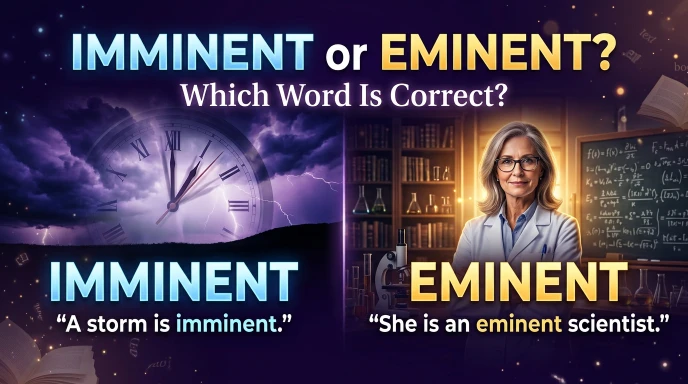
Imminent means something is about to happen soon, while eminent describes someone who is famous, respected, or important.
Have you ever wondered whether to use imminent or eminent? These two words look and sound similar, but they have very different meanings. Many people mix them up because both words contain almost the same letters. However, using the wrong word can change the meaning of a sentence.
The word imminent describes something that will happen very soon. For example, “A storm is imminent” means that a storm may arrive at any moment. On the other hand, eminent describes someone who has a high position, great skill, or strong reputation. For example, “She is an eminent scientist” means that she is a respected scientist.
People often search for “imminent or eminent” because they want to choose the correct word in writing, schoolwork, emails, and daily conversations. This guide explains their meanings, origins, spelling, and common uses. By the end, you will know when to use each word with confidence.
Quick Answer
Both imminent and eminent are correct English words, but they have different meanings.
- Imminent means something will happen very soon.
- Eminent means famous, respected, or important because of skill or achievement.
Examples:
- The danger is imminent.
- She is an eminent doctor.
Use imminent when you talk about an event that may happen soon. Use eminent when you describe a respected or important person.
Remember this simple rule: Imminent means soon, while eminent means respected.
The Origin of Imminent and Eminent
The words imminent and eminent come from Latin, but they developed from different roots.
Origin of Imminent
The word imminent comes from the Latin verb imminere. It means “to overhang” or “to threaten.” Over time, the word gained the meaning of something that stands close or is about to happen.
Today, English speakers use imminent to describe events that may happen very soon.
Example: The town prepared for an imminent flood.
Origin of Eminent
The word eminent comes from the Latin word eminere. It means “to stand out” or “to rise above.” This idea later developed into the meaning of someone who stands out because of their skill, position, or achievements.
Today, people use eminent to describe respected people and important figures.
Example: An eminent professor gave a speech at the university.
Although these words share a similar appearance, their Latin roots give them different meanings.
British English vs American English Spelling
British and American English use the same spelling for both words. Neither word changes when you write for a US, UK, Canadian, or Australian audience.
| Word | American English | British English | Meaning |
| Imminent | Imminent | Imminent | About to happen |
| Eminent | Eminent | Eminent | Respected or important |
Spelling Examples
Imminent:
- An imminent storm may affect the city.
- The deadline is imminent.
Eminent:
- The eminent writer won an award.
- We invited an eminent scientist to speak.
You do not need to change either spelling for a different English speaking country. Focus on the meaning instead.
Which Spelling Should You Use?
Your choice depends on what you want to say. Both words work in American and British English, but they do not share the same meaning.
Use Imminent for Something That Will Happen Soon
Choose imminent when you describe an event, danger, change, or situation that may happen very soon.
Examples:
- The company warned workers about imminent changes.
- Dark clouds showed that rain was imminent.
- The police prepared for an imminent threat.
Use Eminent for a Respected Person
Choose eminent when you describe someone with great knowledge, skill, fame, or respect.
Examples:
- An eminent judge spoke at the event.
- The university invited an eminent author.
- She became an eminent expert in her field.
Advice for Different Audiences
- American English: Use imminent for upcoming events and eminent for respected people.
- British English: Follow the same rule.
- Global English: Use the correct meaning in formal writing, business messages, and everyday communication.
The spelling stays the same across regions. Only the meaning decides which word fits your sentence.
Common Mistakes with Imminent or Eminent
Many writers confuse these words because they look alike. Here are some common mistakes and their corrections.
Using Eminent for an Upcoming Event
Incorrect: The danger is eminent.
Correct: The danger is imminent.
Use imminent because the danger may happen very soon.
Using Imminent to Describe a Famous Person
Incorrect: He is an imminent scientist.
Correct: He is an eminent scientist.
Use eminent because the sentence describes a respected scientist.
Thinking Both Words Mean Important
These words do not mean the same thing. Imminent refers to timing, while eminent refers to reputation or importance.
Ignoring the Sentence Meaning
Do not choose a word only because it looks right. Read the full sentence and ask what you want to describe.
- Is something about to happen? Use imminent.
- Is someone respected or well known? Use eminent.
A quick meaning check can help you avoid these errors.
Imminent or Eminent in Everyday Examples
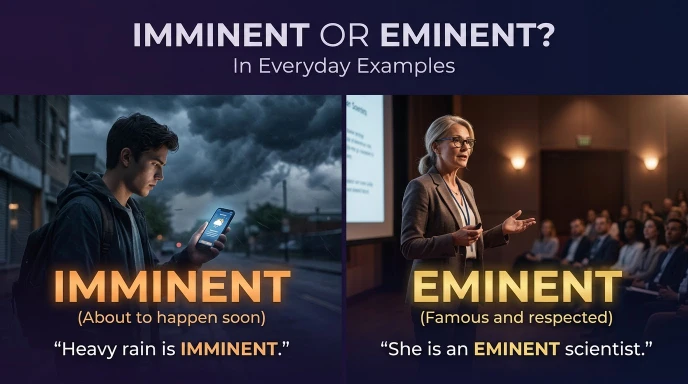
You can use both words in emails, news reports, social media posts, and formal writing. The context tells readers which meaning you intend.
In Emails
Imminent:
“Please complete the report because the deadline is imminent.”
Eminent:
“We are pleased to welcome an eminent guest speaker to our event.”
In News
Imminent:
“Officials warned residents about an imminent storm.”
Eminent:
“An eminent scientist received a national award.”
On Social Media
Imminent:
“An exciting announcement is imminent!”
Eminent:
“Today, we celebrate the work of an eminent artist.”
In Formal Writing
Imminent:
“The team prepared for the imminent launch of the project.”
Eminent:
“The research paper refers to the work of an eminent scholar.”
These examples show why context matters. Imminent describes something close in time, while eminent describes someone with a strong reputation.
Imminent or Eminent:Google Trends & Usage Data
People search for “imminent or eminent” when they want to understand the difference between these similar words. Both terms appear in formal writing, news reports, education, and everyday communication.
Their usage depends on context:
- Imminent often appears in news about storms, danger, deadlines, changes, and upcoming events.
- Eminent often appears in academic writing, biographies, awards, professional profiles, and formal introductions.
Search interest can change by country, season, and current events. For example, news about natural disasters may increase interest in the word imminent. Academic topics may bring more attention to eminent.
Google Trends does not provide a fixed ranking for these words in every country or period. Check its live data to compare search interest by location and date. Do not treat general usage patterns as exact search volume figures.
Imminent vs Eminent: Key Differences
| Feature | Imminent | Eminent |
| Meaning | About to happen soon | Famous or respected |
| Main use | Events and situations | People and achievements |
| Word type | Adjective | Adjective |
| Example | Imminent danger | Eminent scientist |
| Latin root | Imminere | Eminere |
| US spelling | Imminent | Eminent |
| UK spelling | Imminent | Eminent |
The easiest way to remember the difference is to connect imminent with time and eminent with respect.
FAQs
Q1. Is imminent or eminent correct?
Both words are correct. Imminent means something will happen very soon, while eminent describes a respected or important person.
Q2. What does imminent mean?
Imminent means that something is about to happen soon. For example, “The storm is imminent” means the storm may arrive very soon.
Q3. What does eminent mean?
Eminent describes someone who has a high level of respect, fame, or achievement. For example, an eminent doctor has a strong reputation in medicine.
Q4. How can I remember imminent vs eminent?
Connect imminent with an event that is coming soon. Connect eminent with someone who stands out because of their achievements.
Q5. Can I use imminent for a person?
You can use imminent to describe something related to a person that will happen soon, such as an imminent arrival. However, use eminent when you want to describe a person’s reputation or importance.
Q6. Are imminent and eminent pronounced the same way?
No. They have similar spellings, but their pronunciation differs. Imminent begins with an “im” sound, while eminent begins with an “em” sound.
Q7. Do British and American English use different spellings?
No. Both British and American English use imminent and eminent. The spelling and meanings stay the same in both forms of English.
Conclusion
The difference between imminent and eminent is simple once you understand their meanings. Both words are correct, but they serve different purposes. Use imminent when something will happen very soon. You can use it for danger, storms, deadlines, changes, and upcoming events. Use eminent when you describe a respected, famous, or important person.
Remember that British and American English use the same spelling for both words. You do not need to change them based on your audience. Instead, focus on the meaning of your sentence. If you talk about time, choose imminent. If you talk about a person’s reputation, choose eminent.
These small differences can make your writing clearer and more accurate. Keep the examples in this guide in mind, and you will find it easier to use both words correctly in emails, schoolwork, news, and formal writing.
Read More About!
Pullies or Pulleys: Which Spelling Is Correct?
Enunciate or Annunciate: Which Word Is Correct?
Supposed or Suppose: Which Word Is Correct?

I’m Riley Morgan, a writer at Grammerynex, where I write about English grammar, spelling, word meanings, and everyday language usage. I’ve always enjoyed exploring how words work and why some English terms can be confusing. My goal is to explain grammar and word differences in a simple, clear, and practical way so readers can understand English better and use it with confidence.



1 thought on “Imminent or Eminent: Which Word Is Correct?”