“Ought” and “aught” are both correct English words, but they have very different meanings. Ought often shows duty, advice, or what a person should do. Aught means anything or zero, depending on the context. These words sound alike, so many people mix them up when they write. If you have ever wondered whether to write “ought” or “aught,” you are not alone. This guide explains both words in simple terms. You will learn what each word means, where it came from, and how to use it in a sentence. You will also see examples from daily life, emails, news, and formal writing. Both words have a place in English, but they do not serve the same purpose. Once you know their meanings, you can choose the right word with confidence. This guide will help you avoid common spelling mistakes and understand when each word fits.
Quick Answer
Both ought and aught are correct words, but they have different meanings.
- Ought means should or must. It often gives advice or shows duty.
- Aught means anything or nothing, depending on how people use it. It can also mean zero.
Examples:
- You ought to drink more water.
- I do not know aught about the plan.
- The score was five to aught.
Use ought when you talk about what someone should do. Use aught when you mean anything or zero.
Definition and Meaning of Ought or Aught
What Does Ought Mean?
Ought is a modal verb. It means “should” or “it is right to do something.” People use it to give advice, show duty, or talk about what they expect.
Simple meaning: Should or must.
Examples:
- You ought to study for the test.
- We ought to help our neighbors.
- She ought to call her mother.
- They ought to arrive soon.
In each sentence, “ought” shows advice, duty, or expectation.
What Does Aught Mean?
Aught is a pronoun or noun. It can mean “anything” or “something.” In some uses, it means zero or nothing.
Simple meaning: Anything, something, or zero.
Examples:
- I know naught or aught about that old story.
- The team won by six to aught.
- He did not care aught for the result.
Aught often appears in old, formal, or literary writing. People use it less in everyday speech today.
Key Difference in Usage
The easiest way to remember these words is to replace them with simpler words.
- If you can use should, choose ought.
- If you mean anything or zero, choose aught.
For example:
- You ought to rest. (You should rest.)
- The score was three to aught. (The score was three to zero.)
The Origin of Ought or Aught
The words “ought” and “aught” have old roots in English. Their similar sounds and spellings can make them hard to tell apart.
Ought comes from Old English āhte, which was linked to having or owning something. Over time, its meaning changed. It became a word that shows duty, advice, or what someone should do.
Aught comes from Old English āwiht. This word meant “anything” or “something.” It later became “aught” in English. People also used it to mean zero, especially in older number and score expressions.
Both words have been part of English for many years. Their sounds are alike, but their meanings developed in different ways. This is why you should not use them as spelling options for the same meaning.
British English vs American English Spelling
The words ought and aught have the same spelling in British and American English. Neither word changes its spelling based on the country.
However, their use can vary by context. “Ought” remains clear and common in both forms of English. “Aught” is much less common in daily writing and speech.
| Word | British English | American English | Meaning |
| Ought | Ought | Ought | Should or must |
| Aught | Aught | Aught | Anything, something, or zero |
Examples in both forms of English:
- You ought to check your work.
- We ought to leave early.
- The score was four to aught.
The spelling stays the same in both countries. The main difference is how often people use “aught.” Modern writers often choose words like “anything” or “zero” instead.
Which Spelling Should You Use?
Your choice depends on the meaning of your sentence, not your location.
For US Readers
Use ought when you give advice or talk about duty.
Example: You ought to save your work before closing the file.
Use aught only when you mean anything or zero, or when the context calls for an old or literary word.
For UK and Commonwealth Readers
The same rule applies. Use ought for advice, duty, or expectation.
Example: We ought to take an umbrella.
Use aught in its special meanings. In everyday writing, “anything” and “zero” often sound more natural.
For a Global Audience
Choose the word that matches your meaning.
- Use ought for “should.”
- Use aught for “anything” or “zero.”
If your readers may not know the word “aught,” use a simpler word. For example, write “zero” instead of “aught” in a score or number.
Common Mistakes with Ought or Aught
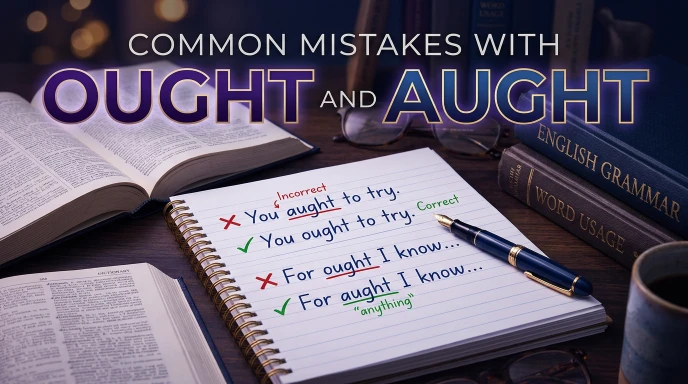
Many writers confuse these words because they sound alike. Here are some common errors and ways to fix them.
1. Using Aught Instead of Ought
Incorrect: You aught to finish your work.
Correct: You ought to finish your work.
Use “ought” when you mean “should.”
2. Using Ought Instead of Aught
Incorrect: The score was six to ought.
Correct: The score was six to aught.
Use “aught” when you mean zero in this type of expression.
3. Forgetting “To” After Ought
Incorrect: You ought finish your homework.
Correct: You ought to finish your homework.
In most common uses, place “to” after “ought.”
4. Treating Both Words as Synonyms
Incorrect: I ought know nothing about it.
Correct: I ought to know more about it.
“Ought” and “aught” do not have the same meaning. Check the meaning before you choose one.
5. Using Aught in Everyday Writing Without Need
Less clear: I do not know aught about this topic.
Clearer: I do not know anything about this topic.
“Aught” can sound old fashioned. Use “anything” when you want simple, modern English.
Ought or Aught in Everyday Examples
Here are examples that show how both words work in different situations.
In Emails
- You ought to review the attached file before the meeting.
- We ought to discuss the new plan tomorrow.
- I do not know aught about the change. (Old fashioned tone)
In News
- Officials say people ought to follow safety rules.
- The team won by three to aught. (An old or literary way to say three to zero)
On Social Media
- We ought to be kinder to each other.
- You ought to try this new book.
- I know naught or aught about that old game. (A playful or old fashioned style)
In Formal Writing
- Every student ought to follow the school rules.
- A good leader ought to listen to others.
- The report found no evidence of aught unusual. (Literary or formal use)
These examples show that “ought” fits many modern situations. “Aught” works best when you want its specific meaning or an old fashioned tone.
Ought or Aught:Google Trends & Usage Data
“Ought” is more familiar in modern English because people use it to give advice or show duty. You may see it in books, articles, lessons, and daily writing.
“Aught” appears less often. It mostly occurs in older texts, literature, historical writing, and certain number expressions. Many writers use “anything,” “something,” or “zero” instead.
Search interest can change by country and over time. However, no verified live Google Trends figures are included here. Exact country rankings or search volume numbers should not be assumed.
For keyword research, both words can attract people who want to check spelling and meaning. The phrase “ought or aught” helps readers understand which word fits their sentence.
Quick Comparison Table
| Feature | Ought | Aught |
| Main meaning | Should or must | Anything, something, or zero |
| Part of speech | Modal verb | Pronoun or noun |
| Common use | Advice, duty, expectation | Older, literary, or number use |
| Daily use | More common | Less common |
| Example | You ought to rest. | The score was two to aught. |
| Modern alternative | Should | Anything or zero |
FAQs
1. Is it ought or aught?
Both words are correct. “Ought” means should or must. “Aught” means anything, something, or zero.
2. What does ought mean?
“Ought” means should or must. It shows advice, duty, or what someone expects.
Example: You ought to tell the truth.
3. What does aught mean?
“Aught” can mean anything or something. It can also mean zero in some expressions.
Example: The score was four to aught.
4. Are ought and aught pronounced the same?
Yes. In most English accents, both words sound the same. This makes them easy to confuse.
5. Is aught still used today?
Yes, but people use it less often than they did in the past. It often appears in literature, older writing, and certain number expressions.
6. Should I write “you ought to” or “you aught to”?
Write “you ought to.” It means “you should.”
Example: You ought to check your answers.
7. Is aught another word for zero?
Yes. “Aught” can mean zero, especially in older or traditional number expressions. In modern writing, “zero” is usually clearer.
Conclusion
The words ought and aught sound the same, but they do not mean the same thing. “Ought” means should or must. Use it when you give advice, show duty, or talk about what someone expects. For example, “You ought to get enough sleep” is correct. “Aught” means anything or something. It can also mean zero in certain expressions. You may find it in old books, poems, and traditional score descriptions. Both words use the same spelling in British and American English. So, your choice does not depend on where you live. It depends on what you want to say. Remember this simple rule: use ought when you mean “should,” and use aught when you mean “anything” or “zero.” If you are writing for a modern audience, choose simple words when “aught” may confuse readers. This small difference can help you write with more care and confidence.
Discover More About!
Landline or Mobile: What Is the Difference and Which Is Better?
Nap or Nothing: Which Phrase Is Correct and What Does It Mean?
Totalled or Totaled: Which Spelling Is Correct?

I’m Riley Morgan, a writer at Grammerynex, where I write about English grammar, spelling, word meanings, and everyday language usage. I’ve always enjoyed exploring how words work and why some English terms can be confusing. My goal is to explain grammar and word differences in a simple, clear, and practical way so readers can understand English better and use it with confidence.





1 thought on “Ought or Aught: Which Word Is Correct and What Is the Difference?”