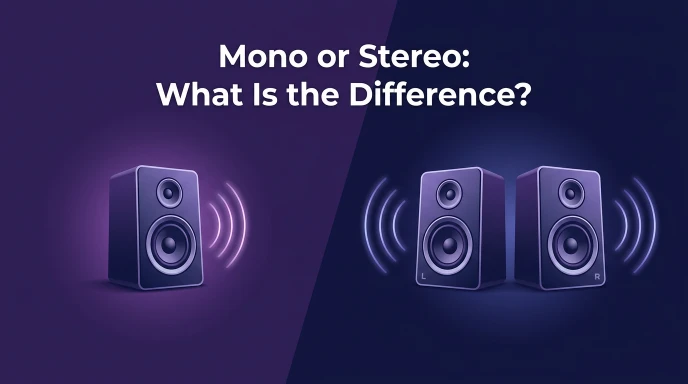
Mono uses one audio channel, while stereo uses two or more channels to create a wider and more spacious sound. This simple difference helps explain why people compare mono or stereo when choosing audio settings.
People often search for mono or stereo when they want to understand sound quality, headphones, speakers, music, videos, or phone settings. The two terms can seem technical at first, but the basic idea is easy. Mono sends the same audio signal through one channel. Stereo uses separate channels to create a sense of space.
You may notice the difference when you listen to music with headphones. Stereo can place sounds toward the left or right side. Mono keeps the audio together in one channel.
Both formats have useful purposes. Stereo often works well for music, movies, and games. Mono can work well for voice recordings, phone calls, podcasts, and situations where simple, clear sound matters.
In this guide, we will explain mono or stereo in simple English. You will learn the meaning, history, spelling, common mistakes, everyday examples, and key differences between these two audio terms.
Quick Answer
- Mono means sound that uses one audio channel. Stereo means sound that uses two or more channels to create a sense of space.
Mono Example
A voice recording may use mono sound:
“Hello, and welcome to today’s podcast.”
The same audio signal plays through the available output channels.
Stereo Example
A song may use stereo sound:
Guitar on the left, vocals in the center, and another instrument toward the right.
Stereo can make audio feel wider and more natural.
Easy Rule
Think of:
Mono = one audio channel
Stereo = multiple audio channels
Definition and Meaning of Mono or Stereo
What Does Mono Mean?
Mono is short for monophonic or monaural.
Mono audio uses one channel for the sound signal. A device may send that signal to both ears or speakers, but the source still uses one channel.
Mono can work well for speech because speech does not always need a wide sound field.
Common mono uses include:
- Voice recordings
- Phone calls
- Some podcasts
- Public announcements
- Certain radio systems
- Simple audio recordings
What Does Stereo Mean?
Stereo comes from stereophonic.
Stereo audio uses separate channels to create a sense of left and right space. A basic stereo recording uses two channels.
For example:
- Left channel
- Right channel
A stereo mix can place different sounds in different parts of the sound field. This can make music, movies, and games feel more spacious.
Simple Meaning
The easiest way to understand the difference is this:
Mono keeps sound in one channel. Stereo uses separate channels to create space.
Context and Usage
The words appear in many audio settings.
You may see:
- Mono audio
- Stereo audio
- Mono recording
- Stereo recording
- Mono microphone
- Stereo headphones
- Mono track
- Stereo track
The best choice depends on the type of audio and the listening setup.
The Origin of Mono or Stereo
The words mono and stereo come from longer technical terms.
Origin of Mono
Mono comes from the Greek word monos, which means one or single.
The term connects with monophonic, which describes sound from a single channel.
The word became common as audio technology developed and people needed simple terms to describe different sound systems.
Origin of Stereo
Stereo comes from the Greek word stereos, which means solid or spatial.
The word relates to stereophonic sound. Audio engineers use stereo systems to create a sense of sound coming from different positions.
Why Are Mono and Stereo Different?
The two terms describe different ways of handling audio channels.
Mono focuses on a single channel.
Stereo separates audio into multiple channels. A common stereo system uses left and right channels.
The difference comes from audio design, not from spelling.
British English vs American English Spelling
There is no British English vs American English spelling difference for mono and stereo.
Both forms use the same spelling.
| Audio Term | British English | American English |
| One channel sound | Mono | Mono |
| Two channel sound | Stereo | Stereo |
| Short form of monophonic | Mono | Mono |
| Short form of stereophonic | Stereo | Stereo |
| Mono recording | Mono recording | Mono recording |
| Stereo recording | Stereo recording | Stereo recording |
Examples
British English:
“This track uses stereo sound.”
American English:
“This track uses stereo sound.”
The spelling stays the same in both forms.
Which Spelling Should You Use?
You can use mono and stereo for American, British, and global English audiences.
No spelling change is needed.
For American English
Use:
- mono
- stereo
- monophonic
- stereophonic
For British English
Use the same forms:
- mono
- stereo
- monophonic
- stereophonic
For a Global Audience
Mono and stereo are widely understood audio terms. They work well on websites, product guides, manuals, and general articles.
For beginners, explain the terms the first time you use them.
For example:
“Mono uses one audio channel, while stereo uses separate left and right channels.”
This makes the meaning clear without using complex technical language.
Common Mistakes With Mono or Stereo
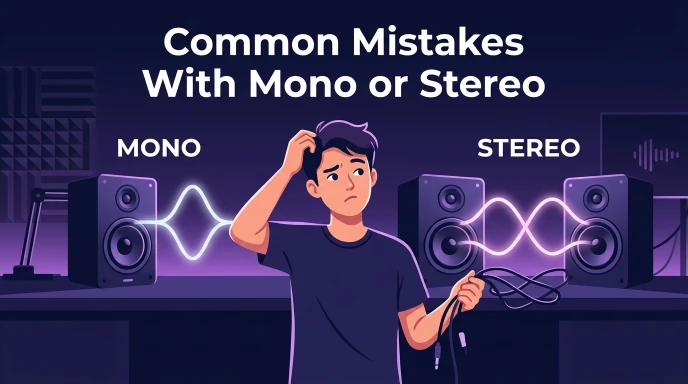
Thinking Mono Means One Speaker
Mono refers to the audio signal, not simply the number of speakers.
A mono signal can play through two speakers.
The important point is that the source uses one audio channel.
Thinking Stereo Always Sounds Better
Stereo can create a wider sound field, but that does not mean it always sounds better.
The best format depends on the audio.
For a simple voice recording, mono can work very well.
For music, stereo can create more space and separation.
Thinking Stereo Always Means Better Quality
Stereo and audio quality are different things.
A stereo recording can have poor sound quality. A mono recording can have very clear sound.
Channel format does not tell you the complete quality of an audio file.
Using Mono and Stereo as Synonyms
Mono and stereo do not mean the same thing.
Mono: one audio channel.
Stereo: multiple audio channels, usually left and right.
Confusing Stereo With Surround Sound
Stereo normally uses two main channels.
Surround sound can use more channels and create a larger sound field around the listener.
Stereo and surround sound are not the same format.
Mono or Stereo in Everyday Examples
In Emails
Audio professionals may use these terms when discussing recordings.
Example:
“Please export the voice track in mono.”
Another example:
“The final music mix should remain in stereo.”
In News
News stories about audio technology may mention both formats.
Example:
“The broadcaster switched from mono to stereo audio.”
On Social Media
People often discuss mono and stereo when they share music or recording tips.
Example:
“This recording sounds better in stereo.”
In Formal Writing
Technical and professional documents may use these terms.
Example:
“The microphone records a mono signal.”
Another example:
“The production uses a stereo audio track.”
On Phones
Many phones include audio settings that affect how sound reaches the listener.
A mono audio option can combine left and right audio into one signal. This can help some listeners hear all parts of an audio track more clearly.
Mono or Stereo:Google Trends & Usage Data
Search interest for mono or stereo can vary by country and topic.
People may search these terms when they want help with:
- Headphones
- Speakers
- Microphones
- Music production
- Video editing
- Phone settings
- Audio recording
- Podcasting
- Gaming
The word stereo often appears in consumer audio searches because many headphones, speakers, music players, and home entertainment systems use stereo sound.
The word mono also appears often in technical guides and accessibility settings. People may search for mono audio when they want to combine left and right channels.
Search interest can change over time. New phones, audio devices, music trends, and recording tools can also affect search behavior.
Because mono and stereo have uses across many audio fields, search interest does not come from one single topic.
Mono vs Stereo: Comparison Table
| Feature | Mono | Stereo |
| Full term | Monophonic / monaural | Stereophonic |
| Basic idea | One audio channel | Two or more audio channels |
| Sound field | More centered | Wider |
| Left right separation | No separate left right source channels | Yes |
| Common use | Speech and simple recordings | Music and entertainment |
| Voice recording | Often suitable | Can work well |
| Music | Can work well | Often preferred |
| Headphones | Works | Works |
| Spelling in US English | Mono | Stereo |
| Spelling in UK English | Mono | Stereo |
Mono or Stereo: Which One Should You Choose?
The right choice depends on your audio.
Choose Mono for Voice
Mono often works well for:
- Voice notes
- Interviews
- Podcasts
- Audiobooks
- Announcements
Speech usually does not need a wide left right sound field.
Choose Stereo for Music
Stereo often works well for:
- Songs
- Movies
- Games
- Concert recordings
- Instrumental music
Stereo can help separate sounds across the left and right sides.
Choose Mono When Simplicity Matters
If you record one speaker or one voice, stereo may not add much value.
A mono recording can also use less storage than an equivalent stereo recording when other settings remain the same.
FAQs
Q1:What is the main difference between mono and stereo?
Mono uses one audio channel. Stereo uses separate channels, usually left and right, to create a wider sense of sound.
Q2:Is mono better than stereo?
Neither format is always better. Mono works well for speech and simple recordings. Stereo often works well for music, movies, and games.
Q3:Is stereo louder than mono?
Not necessarily. Stereo does not automatically mean louder. Loudness depends on recording levels, equipment, mixing, and playback settings.
Q4:Does mono mean one speaker?
No. Mono describes the audio signal. A mono signal can play through one speaker or several speakers.
Q5:Does stereo sound better?
Stereo can sound more spacious and natural because it can create left right separation. However, sound quality depends on more than channel format.
Q6:Should voice recordings use mono or stereo?
Mono often works well for a single voice. It keeps the recording simple and avoids using separate channels when they may not add much value.
Q7:Are headphones stereo?
Most modern headphones support stereo playback. They can send different signals to the left and right sides.
Q8:What does mono audio mean on a phone?
Mono audio can combine left and right audio into one signal. This can help people who listen with one ear or who have difficulty hearing one side of a stereo track.
Conclusion
The choice between mono or stereo depends on how you want your audio to sound and what you plan to record. Mono uses one audio channel. Stereo uses separate channels, usually left and right, to create a wider sound field.
Mono can work very well for speech. Voice notes, podcasts, interviews, and announcements often do not need a wide stereo image. Stereo can work well for music, movies, games, and other content where left right sound placement adds more depth.
Remember that stereo does not automatically mean better sound quality. A clear mono recording can sound better than a poor stereo recording. Your microphone, recording level, mixing, and playback device also affect the final result.
The spelling is simple, too. Mono and stereo use the same spelling in both British and American English. You do not need to change either word for a global audience.
The easiest rule is simple: mono means one channel, while stereo uses multiple channels to create space.
Dig More About!
- Dito or Ditto: Which Word Is Correct?
- Tazing or Tasing: Which Spelling Is Correct?
- Borrow or Barrow: Which Word Is Correct?

Hi, I’m Jordan Wells, a writer interested in English grammar, spelling, and word usage.
At Grammerynex, I simplify confusing words, grammar rules, and common English mistakes into clear, easy-to-understand explanations.
My goal is simple: make English easier, one word at a time.








2 thoughts on “Mono or Stereo: What Is the Difference?”