When you write about using a Taser, you may stop at one small spelling question: should you write tazing or tasing? Both forms appear online, in news reports, and in everyday writing. This makes the choice confusing, especially because the words sound almost the same.
The main difference comes from the verbs tase and taze. The spelling tasing comes from tase, while tazing comes from the less common variant taze. Major dictionaries recognize tase and its forms, while some sources also list taze as a variant. Oxford lists tasing as the ing form of tase.
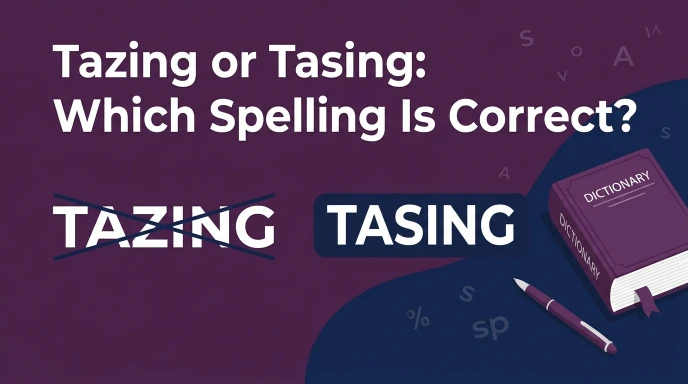
So, which form should you use? In most writing, tasing is the better choice. It follows the spelling of the verb tase and appears in major dictionary sources. However, tazing also appears as a variant. This guide explains the difference, shows clear examples, and helps you choose the right form for your audience.
Quick Answer
- Tasing is the preferred spelling in most standard English writing.
- It comes from the verb tase, which means to stun someone with a Taser or similar electrical device. Oxford lists tasing as the present participle of tase.
- Tazing comes from the alternative verb taze. Some dictionaries and language sources recognize taze as a variant of tase.
- Examples
- Correct and preferred: The officer was tasing the suspect.
- Variant: The officer was tazing the suspect.
- Verb: Police may tase a person during certain situations.
- Past form: The officer tased the suspect.
- For professional, academic, or general website writing, tasing gives you the safer choice.
The Origin of Tazing or Tasing
The word tasing comes from the verb tase. Dictionaries describe tase as a back formation from Taser, the name associated with an electrical control device.
A back formation happens when speakers create a shorter word from an existing word. In this case, people formed tase from Taser.
The verb then follows a normal English pattern:
- tase → tases
- tase → tased
- tase → tasing
The spelling tazing follows another path. It uses taze as the base verb:
- taze → tazes
- taze → tazed
- taze → tazing
Dictionary sources list taze as an alternative form of tase.
The spelling difference therefore does not come from a simple British English versus American English rule. It comes from two different verb spellings that people use for the same basic action.
British English vs American English Spelling
Tasing and tazing do not follow a clear British versus American spelling rule.
American English sources recognize tase and tasing. Collins also lists tase as an American English verb with tased and tasing as its forms.
Oxford also lists tasing as the ing form of tase. At the same time, Oxford lists Taser, Tasered, and Tasering as forms of another verb.
| Form | Base Word | Meaning | Best Use |
| tasing | tase | Using a Taser or similar device | Preferred |
| tazing | taze | Same basic action | Variant |
| tased | tase | Used the device in the past | Common |
| tazed | taze | Used the device in the past | Variant |
| tasering | Taser | Using a Taser | Also found in dictionaries |
| tasered | Taser | Used a Taser | Also used |
The key point is simple: do not treat tazing as the British spelling and tasing as the American spelling. The difference does not work that way.
Which Spelling Should You Use?
For most readers, choose tasing.
For US English
Use tasing in normal writing. It matches the verb tase, which major American dictionary sources recognize.
Example:
The officer reported tasing the suspect during the arrest.
For UK and Commonwealth English
Tasing also works well. Oxford lists it as the ing form of tase.
Example:
The report says that the officer used a Taser after the situation became dangerous.
For global audiences
Use tasing because it connects directly to the widely recognized verb tase.
If your audience expects formal language, you can also avoid the verb completely.
Instead of:
The officer was tasing the man.
You can write:
The officer was using a Taser device.
This option can sound clearer in formal reports.
Common Mistakes with Tazing or Tasing
People often mix tasing, tazing, tased, and tazed. Here are some common mistakes.
Using tazing as the only correct form
Incorrect idea:
Tazing is the only correct spelling.
Better:
Tasing is the preferred form, while tazing appears as a variant.
Treating tazing as a British spelling
Incorrect idea:
Americans use tasing, while British speakers use tazing.
Better:
Both forms appear in English, but they come from different base verbs.
Writing tasing when you need the past form
Wrong:
The officer tasing the suspect yesterday.
Correct:
The officer tased the suspect yesterday.
Confusing tase with tasing
Wrong:
Police officers often tasing suspects.
Correct:
Police officers often tase suspects.
Adding extra letters
Some writers use forms such as tasering when they want the verb tase. Oxford recognizes Tasering, but tasing gives you the shorter form from tase.
Tazing or Tasing in Everyday Examples
The best spelling can depend on the type of writing. Here are simple examples.
In Emails
The report states that an officer was tasing the suspect during the incident.
For workplace emails, tasing gives you a clear and familiar form.
In News Writing
Police said the officer stopped tasing the man after he followed the instructions.
News sources use several forms, including tasing, tased, and tasered. Court records also show the use of both tasing and tasered.
On Social Media
Informal posts may use either spelling:
Why was the officer tasing him?
or
Why was the officer tazing him?
Both forms can communicate the intended meaning, but tasing gives your post a more standard appearance.
In Formal Writing
Formal writers often choose a clearer phrase:
The officer used a Taser device during the incident.
This wording avoids the debate over tasing and tazing.
Tazing or Tasing:Google Trends & Usage Data

Google Trends can help show search interest in spelling questions, but it does not provide a simple dictionary style answer about which spelling is correct. Search interest can also change by country, news events, and public discussions.
The term tasing has strong support because dictionaries list it as the present participle of tase. Oxford gives tasing as the standard ing form, while Dictionary.com also lists tasing under tase.
The spelling tazing also appears online because taze exists as a variant form.
Search interest for either word can rise when news stories discuss police use of electrical control devices. This can create short term spikes in searches without changing the standard spelling.
For general readability, tasing makes the stronger primary keyword choice. You can mention tazing as the alternative spelling to cover both forms.
Tazing or Tasing Comparison Table
| Feature | Tasing | Tazing |
| Base verb | Tase | Taze |
| Meaning | Using a Taser or similar device | Using a Taser or similar device |
| Standard form | Yes | Variant |
| Dictionary support | Strong | Some sources recognize it |
| Common in formal writing | Yes | Less common |
| Good | Yes | Useful as a variant |
| Recommended choice | Yes | Usually secondary |
Tasing vs Tazing: Which One Is More Common?
Tasing generally makes the better choice for standard writing because it comes directly from the widely recognized verb tase.
Merriam Webster lists tase with the forms tased, tasing, and tases.
Dictionary.com also lists tasing as a form of tase and notes that taze can serve as a variant.
This does not make tazing meaningless. Readers can understand it because it follows the spelling of taze. However, writers who want the most widely accepted and straightforward form should choose tasing.
FAQs
Q1:Is tasing or tazing correct?
Tasing is the preferred spelling in most standard writing. Tazing also appears as a variant based on the verb taze.
Q2:Is tasing a real word?
Yes. Dictionaries recognize tase as a verb and list tasing as its present participle.
Q3:Is tazing a real word?
Yes, tazing appears as a variant based on taze. Some dictionary sources recognize taze as an alternative form of tase.
Q4:Should I use tasing in formal writing?
Yes. Tasing works well in standard writing. For very formal documents, you can also write using a Taser device to make the sentence more neutral.
Q5:Is tasing American or British English?
Tasing is not limited to one variety of English. Oxford lists it as the ing form of tase, and American dictionary sources also recognize it.
Q6:What is the past tense of tase?
The past tense is tased.
Example:
Police said they tased the suspect during the incident.
Merriam Webster and Oxford both support tased.
Q7:What is the difference between tasing and tasering?
Both forms can describe the act of using a Taser. Tasing comes from the shorter verb tase, while Tasering comes from Taser used as a verb. Oxford lists both forms.
Conclusion
The choice between tazing or tasing can seem difficult because both forms appear in modern English. The key difference comes from their base verbs. Tasing comes from tase, while tazing comes from the variant taze.
For most writers, tasing offers the best choice. Major dictionary sources list tase and its forms, including tasing and tased. Oxford also lists tasing as the ing form of tase.
You should not treat the two spellings as a simple British English and American English difference. Both forms can appear across English language writing. Still, tasing has stronger support for standard usage.
If you write for a professional, academic, or general audience, choose tasing. If you discuss the alternative spelling, you can mention tazing as a variant. When clarity matters most, phrases such as using a Taser device can also avoid the spelling issue.
Find Out More About!
- Borrow or Barrow: Which Word Is Correct?
- Papyrus or Undertale: What Is the Difference?
- Kobe or Lebro: Who Was the Better Basketball Player?

Hi, I’m Jordan Wells, a writer interested in English grammar, spelling, and word usage.
At Grammerynex, I simplify confusing words, grammar rules, and common English mistakes into clear, easy-to-understand explanations.
My goal is simple: make English easier, one word at a time.







2 thoughts on “Tazing or Tasing: Which Spelling Is Correct?”