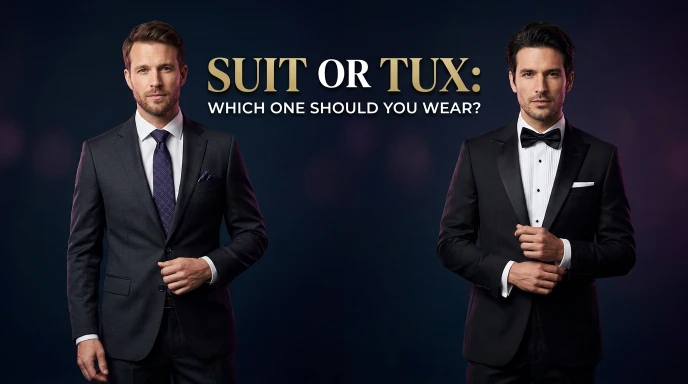
A suit works best for business and semi formal events, while a tux suits black tie events and formal evening occasions.
A suit and a tux may look alike, but they serve different purposes. A suit works well for business meetings, weddings, parties, and many formal events. A tux, also called a tuxedo, suits black tie events, formal dinners, and special evening occasions. Both outfits can make you look smart and stylish. However, the right choice depends on the event, dress code, and time of day.
Many people search for “suit or tux” because they want to know which outfit looks more formal. They may also wonder about the main differences in style, color, fabric, and accessories. A suit usually has a matching jacket and trousers made from the same fabric. A tux often adds satin or silk details on the lapels, buttons, and trouser sides.
This guide explains the difference between a suit and a tux in simple words. You will learn when to wear each one, how their styles differ, and how to choose the right outfit for your next event.
Quick Answer
A suit is a matching jacket and trousers that you can wear for work, weddings, parties, and many other events. A tux, or tuxedo, is a more formal outfit that people often wear to black tie events and evening celebrations.
Here is the simple difference:
- Suit: Best for business, office events, interviews, and many weddings.
- Tux: Best for black tie events, formal galas, and elegant evening parties.
A suit usually has fabric covered lapels and matching trousers. A tux often has satin or silk on the lapels and a satin stripe down each trouser leg.
Example: Wear a navy suit to a business dinner. Choose a black tux for a black tie wedding.
If an invitation says “black tie,” a tux is usually the safest choice. If it says “business formal” or “cocktail attire,” a suit often works well.
The Origin of Suit or Tux
The words suit and tux have different histories. Their origins also help explain why people use them for different types of clothing.
The Origin of Suit
The word suit comes from the Old French word suite. It referred to a sequence or set of things that belonged together. Over time, English speakers used the word for matching clothes.
The modern men’s suit became popular during the 19th century. It grew from formal men’s clothing and developed into a common outfit for work and social events. Today, suits come in many colors, cuts, and fabrics.
The Origin of Tux
The word tux is a short form of tuxedo. The name comes from Tuxedo Park, a community in New York.
In the late 19th century, men in this area helped popularize a shorter formal evening jacket. The style became known as the tuxedo in the United States.
In Britain, people often call this outfit a dinner jacket. The term tuxedo remains common in American English, while dinner jacket is common in British English.
The tuxedo later became a standard choice for black tie events and formal evening occasions.
British English vs American English Spelling
The words suit and tux do not have different spellings in British and American English. Both regions use suit in the same way.
The main difference comes from the word used for a tuxedo. Americans often say tuxedo or tux. British speakers often say dinner jacket.
| Term | American English | British English |
| Suit | Suit | Suit |
| Tuxedo | Tuxedo | Dinner jacket |
| Short form | Tux | Less common |
| Formal evening outfit | Tuxedo | Dinner jacket |
| Black tie dress code | Black tie | Black tie |
Examples
American English:
- He wore a black tux to the gala.
- She helped him choose a formal suit.
- The invitation asks guests to wear a tuxedo.
British English:
- He wore a black dinner jacket to the event.
- He bought a new suit for work.
- The invitation says black tie.
Both forms describe formal clothing. The choice depends on the audience and region.
Which Spelling Should You Use?
You do not need to choose between two spellings of suit or tux. The words have the same spelling in both American and British English.
However, you should choose the right term for your readers.
For American Readers
Use tuxedo in formal writing. You can use tux in casual writing, fashion posts, and everyday conversation.
Example: “He plans to wear a black tuxedo to the wedding.”
For British Readers
Use dinner jacket when you describe the formal evening jacket. Use suit for a standard matching jacket and trousers.
Example: “He plans to wear a black dinner jacket to the event.”
For Global Readers
Use tuxedo when you want a term that many readers will understand. You can also explain that British English often uses dinner jacket.
For clear writing, match your word choice to your audience. This helps readers understand your message without confusion.
Common Mistakes with Suit or Tux
Many people use the words suit and tux as if they mean the same thing. They are related, but they do not describe the same style of clothing.
Here are some common mistakes and simple ways to avoid them.
Thinking Every Suit Is a Tux
A suit does not become a tux just because it looks formal. A tux usually has satin or silk details, while a standard suit often does not.
Incorrect idea: Every black suit is a tux.
Correct idea: A black suit and a black tux have different designs.
Wearing a Suit to Every Black Tie Event
A black tie invitation usually calls for a tuxedo. A regular suit may look less formal than the event requires.
Calling a Tux a Regular Suit
A tux has special formal details. It often includes satin lapels, a satin trouser stripe, and a bow tie.
Ignoring the Dress Code
The event dress code matters more than your personal style. A casual suit may not fit a black tie event.
Choosing the Wrong Accessories
A tux usually looks best with a formal shirt, bow tie, and polished dress shoes. A suit gives you more freedom with ties, shirts, and shoes.
Suit or Tux in Everyday Examples
The words suit and tux appear in daily conversations, fashion advice, event invitations, and formal writing. These examples show how to use them in the right context.
In Emails
- “I plan to wear a navy suit to the meeting.”
- “Could you confirm if the event requires a tux?”
- “Please let me know whether the wedding dress code is black tie.”
In News
- “The actor wore a classic black tux to the award show.”
- “The company asked its staff to wear formal suits for the event.”
- “The designer showed a new range of men’s suits.”
On Social Media
- “A well fitted suit can make a great first impression.”
- “Ready for the big night in my black tux!”
- “Which look do you prefer: a classic suit or a tux?”
In Formal Writing
- “Guests should wear a tuxedo for the black tie dinner.”
- “The team must wear business suits during the conference.”
- “The dress code requires a dark suit and a formal shirt.”
These examples show that a suit fits many settings, while a tux usually suits special formal events.
Suit or Tux:Google Trends & Usage Data

People search for suit and tux when they shop for clothes, plan weddings, attend formal events, or look for fashion advice. Both terms have clear uses, but they attract different search needs.
Search Interest for Suit
The word suit has a broad meaning. People use it to search for business suits, wedding suits, men’s clothing, women’s suits, and formal outfits.
Common searches include:
- Men’s suit styles
- Best suit for a wedding
- Business suit ideas
- How to wear a suit
- Suit size guide
Search Interest for Tux
The word tux often relates to formal events. People search for tuxedos when they need clothes for weddings, galas, proms, and black tie dinners.
Common searches include:
- Tux vs suit
- Black tuxedo
- Wedding tux ideas
- Tuxedo rental
- What to wear to a black tie event
Usage by Country
People in the United States often use tuxedo or tux. In the United Kingdom, many people use dinner jacket. The word suit remains common in both regions.
The exact search interest can change by season, country, and event. Weddings, school dances, and award ceremonies may lead to more searches for tuxedos. Workwear and everyday fashion searches often use the word suit.
Suit vs Tux: Key Differences
A suit and a tux share some features, but their design and purpose differ. This table shows the main points.
| Feature | Suit | Tux |
| Main use | Work and social events | Formal evening events |
| Formal level | Formal to semi formal, depending on style | Very formal |
| Lapels | Usually the same fabric as the jacket | Often satin or silk |
| Trousers | Usually no satin stripe | Often have a satin stripe |
| Shirt | Many shirt styles work | Usually a formal dress shirt |
| Tie | Neck tie or no tie | Often a bow tie |
| Shoes | Dress shoes or smart shoes | Usually polished formal shoes |
| Colors | Many colors and patterns | Often black or midnight blue |
| Best events | Office, interviews, weddings | Black tie events and galas |
Which One Looks More Formal?
A tux usually looks more formal than a standard suit. Its satin details and classic evening style make it a strong choice for black tie events.
A suit offers more options. You can wear it to work, a dinner, a wedding, or a formal meeting. You can also dress it up or down with different shirts, ties, and shoes.
Which One Costs More?
The price depends on the brand, fabric, fit, and quality. A high quality suit can cost more than a basic tux. A custom tux can also cost much more than an off the rack suit.
Think about how often you will wear the outfit before you buy it.
FAQs
Q1. Is a tux more formal than a suit?
Yes. A tux usually has a higher level of formality than a standard suit. People often wear it to black tie events and formal evening occasions.
Q2. Can I wear a suit to a black tie event?
A tux is the traditional choice for a black tie event. Some hosts may accept a very formal dark suit, but you should check the dress code first.
Q3. What is the main difference between a suit and a tux?
A tux often has satin or silk details on its lapels and trouser sides. A standard suit usually has matching fabric on these parts.
Q4. Is a black suit the same as a black tux?
No. Both may look black, but they have different designs. A black tux often has satin details, while a black suit usually does not.
Q5. Can I wear a tux to a wedding?
Yes. A tux works well for a formal or black tie wedding. For a casual or daytime wedding, a suit may fit better.
Q6. Do British people say tux or dinner jacket?
British speakers often use the term dinner jacket. Americans usually say tuxedo or tux.
Q7. Should I buy a suit or a tux first?
A suit is often the better first choice because you can wear it to more events. Choose a tux if you often attend black tie events or need one for a special occasion.
Conclusion
The choice between a suit and a tux depends on the event and its dress code. A suit gives you more freedom. You can wear it to work, meetings, weddings, dinners, and many social events. It also comes in many colors and styles, so you can use it for both formal and less formal occasions.
A tux offers a more classic formal look. Its satin lapels and trouser details make it a strong choice for black tie events, galas, and elegant evening parties. If an invitation says black tie, a tux is usually the best option. If the event calls for business or cocktail attire, a suit often works well.
Remember that a black suit does not count as a tux just because both outfits look dark. Their details and dress codes set them apart. Also, the terms can change by region. Americans often say tuxedo, while British speakers often say dinner jacket.
Before you choose, read the invitation, think about the event, and pick an outfit that fits well. The right choice will help you look smart, feel comfortable, and dress with confidence.
Learn More About!
Signors or Signers: Which Spelling Is Correct?
Either or Shoes: Which Is Correct?
Sentence or Sentance: Which Spelling Is Correct?

I’m Riley Morgan, a writer at Grammerynex, where I write about English grammar, spelling, word meanings, and everyday language usage. I’ve always enjoyed exploring how words work and why some English terms can be confusing. My goal is to explain grammar and word differences in a simple, clear, and practical way so readers can understand English better and use it with confidence.








2 thoughts on “Suit or Tux: Which One Should You Wear?”